
Thursday, January 10, 2019

Monday, January 7, 2019

Sunday, January 6, 2019


Sunday, December 17, 2017

Sunday, May 21, 2017
DINOSAURS, A Cheat Sheet
I went to my local toy store (Harbor Freight) and discovered that they have wooden dinosaur puzzles for $1,99 each. I got a couple and put them together right away, ostensibly for my granddaughters . . . well, okay, they saw them when they skyped us on Mothers' Day and they wanted them, so now they are going to my granddaughters' house.
The problem is that with them being adopted by my granddaughters, I'm going to have to know the names of these prehistoric creatures. And, well, I have trouble with names longer than my hand. Once I get past the names, it's "How big were the real dinosaurs, Paw Paw?" So I developed this cheat sheet to help me remember their names and size (in the order of construction):

pronunciation: sty-RAK-oh-SOR-us:
etymology: According to DinoChecker, Styracosaurus is derived from the Greek "styrax" (spike on the end of a spear) and "sauros" (lizard), referring to the huge spikes on its frill.
wiki: Styracosaurus
 link to size illustration
location: North America (Alberta, Montana)
period: Cretaceous (Campanian stage, 75.5-75 million years ago)

pronunciation: pah-ra-SOR-oh-LO-fus
etymology: According to DinoChecker: Parasaurolophus is derived from the Greek "para" (near), "sauros" (lizard) and "lophos" (crest) because of its once-thought affinity with Saurolophus due to their superficially similar crests. They aren't as closely related as Parks—the coining author—initially thought.
wiki: Parasaurolophus
 link to size illustration
location: North America (Alberta, New Mexico, Utah)
period: Late Cretaceous (76.5-74.5 million years ago)

pronunciation: plē-sē-ə-ˌsȯr, -zē-
etymology: According to Online Etymology Dictionary. 1825, from Modern Latin Pleisiosaurus (1821), coined by English paleontologist William Daniel Conybeare (1787-1857) from Greek plesios "near," related to pelas, + -saurus.
wiki: Plesiosaurus (Loch Ness Monster a descendant?)
 link to size illustration
location: Lias of England
period: Early Jurassic
pronunciation: SPIEN-oh-SOR-us
etymology: According to DinoChecker: Spinosaurus is derived from the Latin "spina" (spine) and the Greek "sauros" (lizard) because of the large paddle-like spines raised along its back.)
Wiki Spinosaurus
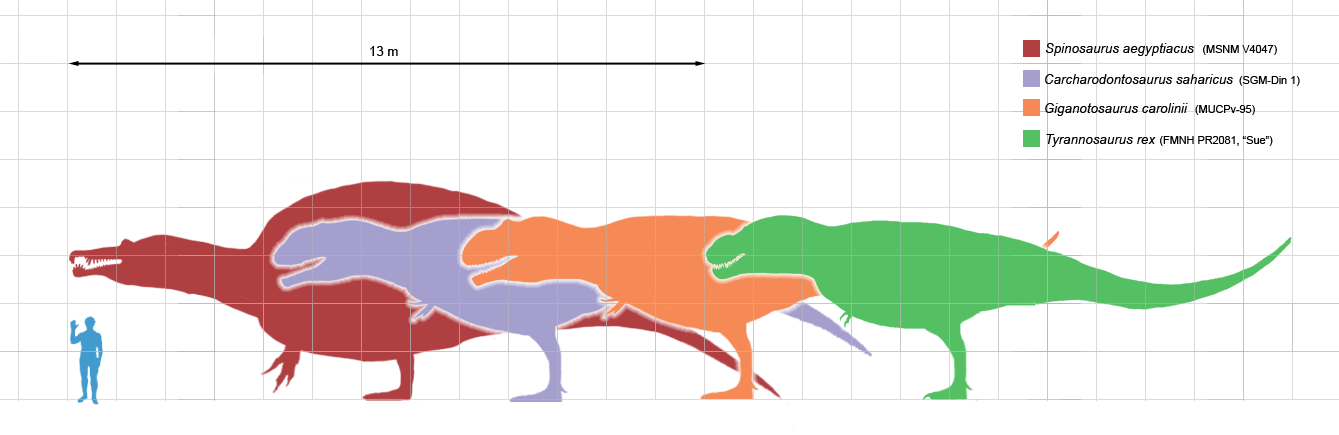 link to size illustration
location: North Africa
period: Cretaceous (Lower Albian to lower Cenomanian stages)
etymology: According to Google: modern Latin, from di- ‘twice’ + Greek metron ‘measure’ + odous, odont- ‘tooth’ (taken in the sense ‘two long teeth’
wiki Dimetrodon
 link to size illustration
location: southwestern USA and Germany
period: Early Permian (Cisuralian epoch, 295-272 million years ago)
etymology: According to Oxford English Dictionary: All of the earliest quotations indicate that English-speakers first encountered the word as a result of the discovery of mammoth bones in Siberia. If ‘read’ carefully, this information can tell us a lot about the emergence and development of the word mammoth.
wiki: Mammoth
 link to size illustration
location: Africa, Europe, Asia, North America
period: Pliocene epoch to Holocene epoch (from 5 million years ago to 4,500 years ago)
etymology: According to Google: modern Latin, from Greek pteron ‘wing’ + an- ‘without’ + odous, odont- ‘tooth.’
wiki: Pteranodon (a pterosaur, not a dinosaur!)
 link to size illustration

TRIASSIC TIMELINE

PERMIAN TIMELINE

Dimetrodon
The problem is that with them being adopted by my granddaughters, I'm going to have to know the names of these prehistoric creatures. And, well, I have trouble with names longer than my hand. Once I get past the names, it's "How big were the real dinosaurs, Paw Paw?" So I developed this cheat sheet to help me remember their names and size (in the order of construction):
Styracosaurus

pronunciation: sty-RAK-oh-SOR-us:
etymology: According to DinoChecker, Styracosaurus is derived from the Greek "styrax" (spike on the end of a spear) and "sauros" (lizard), referring to the huge spikes on its frill.
wiki: Styracosaurus

location: North America (Alberta, Montana)
period: Cretaceous (Campanian stage, 75.5-75 million years ago)
Parasaurolophus

etymology: According to DinoChecker: Parasaurolophus is derived from the Greek "para" (near), "sauros" (lizard) and "lophos" (crest) because of its once-thought affinity with Saurolophus due to their superficially similar crests. They aren't as closely related as Parks—the coining author—initially thought.
wiki: Parasaurolophus

location: North America (Alberta, New Mexico, Utah)
period: Late Cretaceous (76.5-74.5 million years ago)
Pleisiosaurus

pronunciation: plē-sē-ə-ˌsȯr, -zē-
etymology: According to Online Etymology Dictionary. 1825, from Modern Latin Pleisiosaurus (1821), coined by English paleontologist William Daniel Conybeare (1787-1857) from Greek plesios "near," related to pelas, + -saurus.
wiki: Plesiosaurus (Loch Ness Monster a descendant?)

location: Lias of England
period: Early Jurassic
Spinosaurus
etymology: According to DinoChecker: Spinosaurus is derived from the Latin "spina" (spine) and the Greek "sauros" (lizard) because of the large paddle-like spines raised along its back.)
Wiki Spinosaurus
location: North Africa
period: Cretaceous (Lower Albian to lower Cenomanian stages)
Dimetrodon
pronunciation: dīˈme‧trəˌdän\etymology: According to Google: modern Latin, from di- ‘twice’ + Greek metron ‘measure’ + odous, odont- ‘tooth’ (taken in the sense ‘two long teeth’
wiki Dimetrodon

location: southwestern USA and Germany
period: Early Permian (Cisuralian epoch, 295-272 million years ago)
Mammoth
pronunciation: M AE M - uh thetymology: According to Oxford English Dictionary: All of the earliest quotations indicate that English-speakers first encountered the word as a result of the discovery of mammoth bones in Siberia. If ‘read’ carefully, this information can tell us a lot about the emergence and development of the word mammoth.
wiki: Mammoth

location: Africa, Europe, Asia, North America
period: Pliocene epoch to Holocene epoch (from 5 million years ago to 4,500 years ago)
Pteranodon
pronunciation: tə-ˈra-nə-ˌdän, -ˈrä-\etymology: According to Google: modern Latin, from Greek pteron ‘wing’ + an- ‘without’ + odous, odont- ‘tooth.’
wiki: Pteranodon (a pterosaur, not a dinosaur!)

location: North America (Kansas, Alabama, Nebraska, Wyoming, South Dakota)
period:late Cretaceous
etymology: Dictionary.com: from Modern Latin order name Stegosauria (O.C. Marsh, 1877), from comb. form of Greek stegos "roof" (from stege "covering," stegein "to cover," from PIE root *(s)teg- "cover," especially "cover with a roof" (cf. Sanskrit sthag- "cover, conceal, hide;" Latin tegere "to cover;" Lithuanian stegti "roof;" Old Norse þekja, Old English þeccan "thatch;" Dutch dekken, German decken "to cover, put under roof;" Irish tuigiur "cover," tech "house;" Welsh toi "thatch, roof," ty "house") + -saurus. The back-armor plates in the fossilized remains look like roof tiles.
wiki: Stegosaurus

link to size illustration
location: western USA and Portugal
period: late Jurassic (from Kimmeridigan to Tithonian ages: 155 - 150 million years ago)
etymology: DinoChecker: Tyrannosaurus is derived from the Greek "tyrannos" (tyrant) and "sauros" (lizard).
wiki: Tyrannosaurus

link to size illustration
location: western North America
period: Late Cretaceous (Maastrichitan age: 68 - 66 million years ago)
HUMAN TIMELINE
 PALEOLITHIC ART TIMELINE
period:late Cretaceous
Stegosaurus
pronunication: STEG-uh-SAWR-usetymology: Dictionary.com: from Modern Latin order name Stegosauria (O.C. Marsh, 1877), from comb. form of Greek stegos "roof" (from stege "covering," stegein "to cover," from PIE root *(s)teg- "cover," especially "cover with a roof" (cf. Sanskrit sthag- "cover, conceal, hide;" Latin tegere "to cover;" Lithuanian stegti "roof;" Old Norse þekja, Old English þeccan "thatch;" Dutch dekken, German decken "to cover, put under roof;" Irish tuigiur "cover," tech "house;" Welsh toi "thatch, roof," ty "house") + -saurus. The back-armor plates in the fossilized remains look like roof tiles.
wiki: Stegosaurus
link to size illustration
location: western USA and Portugal
period: late Jurassic (from Kimmeridigan to Tithonian ages: 155 - 150 million years ago)
Tyrannosaurus
pronunication: tye-RAN-uh-SAWR-usetymology: DinoChecker: Tyrannosaurus is derived from the Greek "tyrannos" (tyrant) and "sauros" (lizard).
wiki: Tyrannosaurus
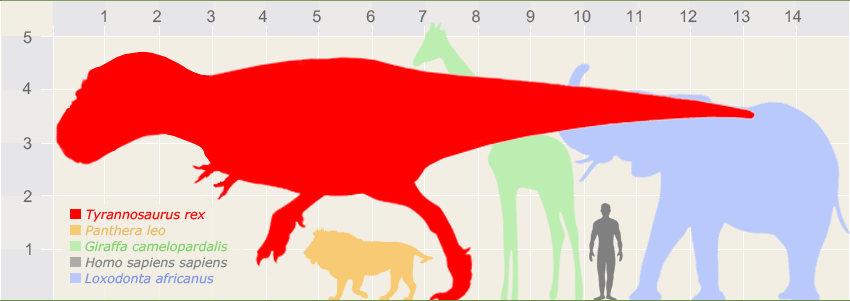
link to size illustration
location: western North America
period: Late Cretaceous (Maastrichitan age: 68 - 66 million years ago)
STEPPING BACK IN TIME, AN OVERVIEW
HUMAN TIMELINE


QUATERNARY TIMELINE

Mammoth <
NEOGENE TIMELINE

> Mammoth
PALEOGENE TIMELINE

CRETACEOUS TIMELINE

Tyrannosaurus
Pteranodon
Spinosaurus
JURASSIC TIMELINE


Mammoth <
NEOGENE TIMELINE

> Mammoth
PALEOGENE TIMELINE

CRETACEOUS TIMELINE

Tyrannosaurus
Pteranodon
Styracosaurus
Spinosaurus
JURASSIC TIMELINE

TRIASSIC TIMELINE

PERMIAN TIMELINE

Dimetrodon
Monday, April 10, 2017
Internet Privacy Protection

Now I know why they call it the DarkNet : )
When I learned that the Republican government relaxed Internet privacy protection so that Internet service providers (ISP) can sell our personal information, I was driven to find ways to protect our privacy. This led to a few of nights of obsessive internet gazing, It was a struggle to escape the information vortex, but, like Odysseus's escape from Charybdis, I brought back the goods : )
First, what are the issues? Well, whenever we use the internet to look for stuff, look at stuff, buy stuff, send stuff, or get stuff, our computer turns the stuff into little packets of information that is sent and received through our ISP. The packets themselves are information about us doing things ("talking", "listening", buying, selling, looking, reading); the packaging contains information that could identify us; and the packet paths tell where we are and who we're communicating with. So, it looks like we have at least 3 issues:
- Protecting our identity
- Protecting what we're doing
- Protecting who we're doing it with
The strategies that have evolved to address these issues are:
- Encrypting the packets
- Tracking protection
- Virtual private networks
1. As a user, we can tell when our packets are being encrypted when we see "https:" in our web browser's URL window. Luckily, since most of us will look at that last sentence and see gibberish, our most popular web browsers, Chrome and Firefox, have "HTTPS Everywhere" that facilitates our encrypted communication. The following links will let you install them in your browser:
- chrome: install and use the HTTPS Everywhere extension
- Firefox: install and use the HTTPS Everywhere add-on
2. There doesn't seem to be a all-inclusive strategy to provide tracking protection. The FoxFire browser allows you turn on Privacy Option: "Tracking Protection in Private Browsing". This option uses a list to identify and block trackers. The Chrome browser has an Incognito Window feature, but it only prevents your browser history from being saved, it doesn't stop tracking. That being said, Ghostery provides a webpage by webpage solution that may work for you. Here are links to install them in your browser (if you decide to create an account with Ghostery, you'll be able to access browser level functionality via the ubiqitous 3 dots in the upper right . . . Even though I did this, I'm wondering if I didn't trade lots of neferious trackers for one sly one : )
- chrome: install and use the Ghostery extension
- Firefox: install and use the Ghostery add-on
3. The last strategy, using a VPN, will construct a virtual tunnel through your Service Provider's "wall" so that you can do your internet browsing on the other side. The challenges with the VPN solution is that, unless you're Internet savvy and can set up a VPN on your own, you'll be renting a VPN connection (or you should be, because if it's free, it will be your VPN provider who may be selling your privacy).
The problem that you run into when looking for the best VPN is that you need some expert advice delivered in language you can understand. Luckily I found one that does a good job of looking at 110 and whittling it down to 3 VPNs with a clear commentary on the process they used. Here are the 3 listed in order:
- NordVPN ($70/yr)
- ExpressVPN ($100/yr)
- PrivateInternetAccess ($40/yr)
I ended up renting TorGuard VPN because my original evaluation track led me through the DarkNet. Speaking of which, if you don't want the VPN route, consider using the Tor Browser with Tracker Protection enabled. (PC mag review)
REFERENCE:
- How the Republicans Sold Your Privacy to Internet Providers, by Tom Wheeler, New York Times, Mar 29, 2017
- Worried about companies spying on your browsing? Here's what you can do, by Selena Larson, CNN, Mar 29, 2017
- Here's How to Protect Your Privacy From Your Internet Service Provider, by Amul Kalia, Electronic Frontier Foundation, Apr 3, 2017
- Three privacy tools that block your Internet provider from tracking you, by Ian Paul, PC World, Mar 29, 2017
- VPNs won't save you from Congress' Internet privacy giveaway, by Klint Finley, Wired, Mar 28, 2017
- The Best VPN, Reviews.com, Feb 20,2017
- Darknet, wikipedia
- Tor (anonymity network), wikipedia
- Tor Browser Review and Rating, PC Magazine, Jan 25, 2016
Subscribe to:
Posts (Atom)