I've compiled a list of my questions with answers based on information from WHO, CDC, Annals of Internal Medicine. Asthma and Allergy Foundation of America:
- Is COVID-19 airborne?
- What is the incubation period for this coronavirus?
- When do symptoms normally appear after exposure?
- How are the symptoms different from a cold or flu?
- What to do if I become sick?
- I use a CPAP, what do I need to know if I get the coronavirus?
- When should I seek medical attention?
- If someone in my home gets sick, how can I safely care for them?
- How long are people usually sick with this virus?
- When is it okay to stop home isolation?
- What can we do to stop the spread?
- How are the states and counties where my family live managing their cases?
- What percentage of people my age die from COVID-19?
- Other questions?
 |
Illustration based on mild cases.
Patients with severe or critical cases
|
The virus that causes COVID-19 is mainly transmitted through droplets generated when an infected person coughs, sneezes, or speaks. These droplets are too heavy to hang in the air. They quickly fall on floors or surfaces.
You can be infected by breathing in the virus if you are within 1 meter of a person who has COVID-19, or by touching a contaminated surface and then touching your eyes, nose or mouth before washing your hands.
The median incubation period of COVID-19 is estimated to be 5.1 days, and 97.5% of those who develop symptoms will do so within 11.5 days of infection.
(Annals of Internal Medicine)
The following COVID-19 symptoms may appear 2-14 days after exposure (based on the incubation period of MERS-CoV viruses):
- Fever
- Cough
- Shortness of breath
(CDC)
The Asthma and Allergy Foundation of America has a chart that can help determine if the symptoms are COVID-19, a cold, the flu, or seasonal allergies. Please consult your medical provider for any symptoms that are severe or concerning.
(aafa)
The CDC has a comprehensive list of steps to follow if you are sick and how to take care of yourself at home.
They have published this
one-page 10 item guide for managing your symptoms at home:
As far as using over the counter drugs to manage coronavirus symptoms, here’s some guidance from the U.S. Food and Drug Administration.
(CDC)(FDA)
The use of Continuous Positive Air Pressure (CPAP) presents two increased risks to household members: CPAP equipment (masks, headgear, hoses, humidifiers) may be contaminated; and the CPAP may 'spray' the virus into the air.
For specific things to do, see Guidelines for CPAP Use During COVID-19 published by Sleep Center of Middle Tennessee.
If you develop emergency warning signs for COVID-19 get medical attention immediately. Emergency warning signs include*:
- Trouble breathing
- Persistent pain or pressure in the chest
- New confusion or inability to arouse
- Bluish lips or face
*This list is not all inclusive. Please consult your medical provider for any other symptoms that are severe or concerning.
(CDC)
The CDC has guidance to safely care for people with COVID-19 who can be cared for at home.
(CDC)
The median time from onset to clinical recovery for mild
cases is approximately 2 weeks and is 3-6 weeks for patients with severe or critical disease.
(Report of the WHO-China Joint Mission on Coronavirus Disease 2019, p.14 )
Persons with COVID-19 who have symptoms and were directed to care for themselves at home may discontinue home isolation under the following conditions:
- At least 3 days (72 hours) have passed since recovery defined as resolution of fever without the use of fever-reducing medications; AND
- improvement in respiratory symptoms (e.g., cough, shortness of breath); AND
- At least 7 days have passed since symptoms first appeared.
Persons who will be tested to determine if they are still contagious, they can leave home after these three things have happened:
- They no longer have a fever (without the use medicine that reduces fevers)
AND
- other symptoms have improved (for example, when their cough or shortness of breath have improved)
AND
- They received two negative tests in a row, 24 hours apart. Their doctor will follow CDC guidelines.
11. What can we do to stop the spread?
The United States is following a four part strategy to stop the spread of COVID-19:
- Social Distancing
- Quarantine
- Isolation
- Using cloth masks (Son & Dad: DIY Masks)
The challenge, of course, is to influence a culture that prides itself in self-centered personal freedom to practice the unselfish behaviors that are best for the country. As is always the case, some communities are more successful than others.
POPULATION: CA 39.5M, KS 2.9M, LA 4.7M
POPULATION: ALAMEDA 1.7M, ORANGE 3.2M, SACRAMENTO 1.5M
Normalizing based on population, shows a different perspective:
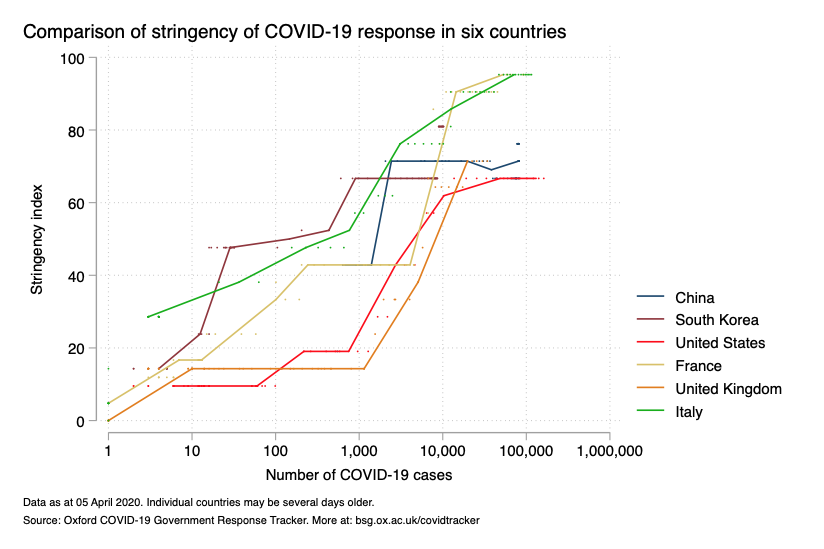
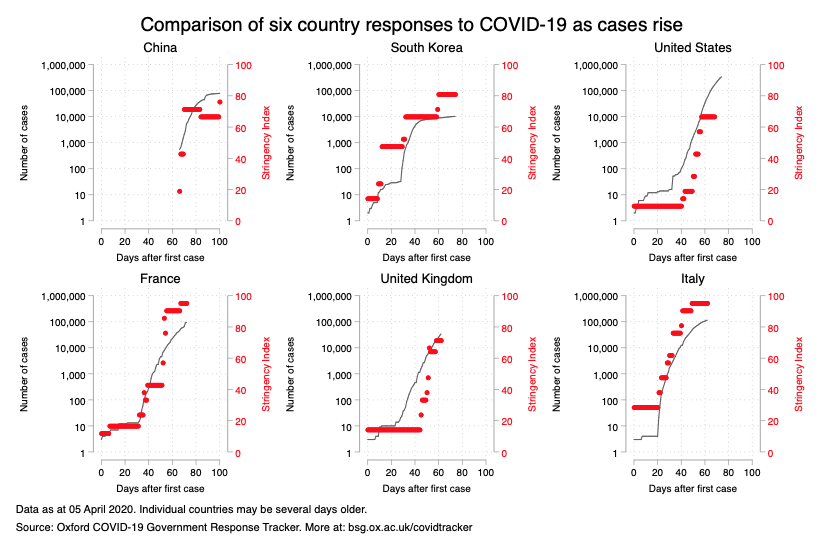
If you want to see how the USA is coping with the virus relative to other countries, browse the NYTimes Our World in Data and ponder the Oxford COVID-19 Government Response Tracker. The graph that compares the stringency of government responses relative to the growing number of cases 'timeline',
13. What percentage of people my age die from COVID-19?
I answer this on the following page:
14. OTHER QUESTIONS?